we provide Vivid Paloalto-Networks PCNSE practice test which are the best for clearing PCNSE test, and to get certified by Paloalto-Networks Palo Alto Networks Certified Security Engineer (PCNSE)PAN-OS 9.0. The PCNSE Questions & Answers covers all the knowledge points of the real PCNSE exam. Crack your Paloalto-Networks PCNSE Exam with latest dumps, guaranteed!
Online Paloalto-Networks PCNSE free dumps demo Below:
NEW QUESTION 1
An engineer is reviewing the following high availability (HA) settings to understand a recent HAfailover event.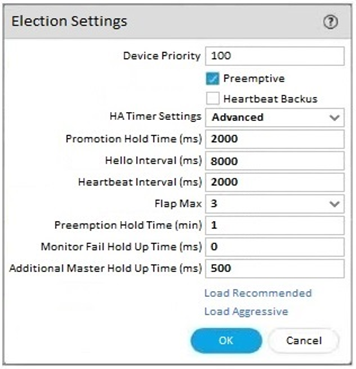
Which timer determines the frequency between packets sent to verify that the HA functionality on the other HA firewall is operational?
- A. Monitor Fail Hold Up Time
- B. Promotion Hold Time
- C. Heartbeat Interval
- D. Hello Interval
Answer: D
Explanation:
The timer that determines the frequency between packets sent to verify that the HA functionality on the other HA firewall is operational is the Hello Interval. The Hello Interval is the interval in milliseconds between hello packets that are sent to check the HA status of the peer firewall. The default value for the Hello Interval is 8000 ms for all platforms, and the range is 8000-60000 ms. If the firewall does not receive a hello packet from its peer within the specified interval, it will declare the peer as failed and initiate a failover12. References: H Timers, Layer 3 High Availability with Optimal Failover Times Best Practices
How to Configure Ping Interval/Timeout Settings ... - Palo Alto Networks
NEW QUESTION 2
When you import the configuration of an HA pair into Panorama, how do you prevent the import from affecting ongoing traffic?
- A. Set the passive link state to shutdown".
- B. Disable config sync.
- C. Disable the HA2 link.
- D. Disable HA.
Answer: B
Explanation:
To prevent the import from affecting ongoing traffic when you import the configuration of an HA pair into Panorama, you should disable config sync on both firewalls. Config sync is a feature that enables the firewalls in an HA pair to synchronize their configurations and maintain consistency. However, when you import the configuration of an HA pair into Panorama, you want to avoid any changes to the firewall configuration until you verify and commit the imported configuration on Panorama. Therefore, you should disable config sync before importing the configuration, and re-enable it after committing the changes on
Panorama12. References: Migrate a Firewall HA Pair to Panorama Management, PCNSE Study Guide (page 50)
NEW QUESTION 3
When an engineer configures an active/active high availability pair, which two links can they use? (Choose two)
- A. HSCI-C
- B. Console Backup
- C. HA3
- D. HA2 backup
Answer: CD
Explanation:
https://docs.paloaltonetworks.com/pan-os/10-2/pan-os-admin/high-availability/set-up-activeactive-ha/prerequisit
These are the two links that can be used to configure an active/active high availability pair. An active/active high availability pair consists of two firewalls that are both active and share the traffic load between them1. To configure an active/active high availability pair, the following links are required2: HA1: This is the control link that is used for exchanging heartbeat messages and configuration synchronization between the firewalls. It can be a dedicated interface or a subinterface. It can also have a backup link for redundancy. HA2: This is the data link that is used for forwarding sessions from one firewall to another in case of failover or load balancing. It can be a dedicated interface or a subinterface. It can also have a backup link for redundancy. HA3: This is the session owner synchronization link that is used for synchronizing session information between the firewalls in different virtual systems. It can be a dedicated interface or a subinterface. It is only required for active/active high availability pairs, not for active/passive pairs.
NEW QUESTION 4
What type of address object would be useful for internal devices where the addressing structure assigns meaning to certain bits in the address, as illustrated in the diagram?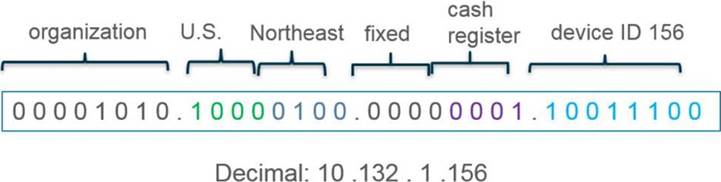
- A. IP Netmask
- B. IP Wildcard Mask
- C. IP Address
- D. IP Range
Answer: B
Explanation:
https://docs.paloaltonetworks.com/pan-os/10-2/pan-os-admin/policy/use-address-object-to-represent-ip-addresse
NEW QUESTION 5
An engineer is configuring a firewall with three interfaces:
• MGT connects to a switch with internet access.
• Ethernet1/1 connects to an edge router.
• Ethernet1/2 connects to a visualization network.
The engineer needs to configure dynamic updates to use a dataplane interface for internet traffic. What should be configured in Setup > Services > Service Route Configuration to allow this traffic?
- A. Set DNS and Palo Alto Networks Services to use the ethernet1/1 source interface.
- B. Set DNS and Palo Alto Networks Services to use the ethernet1/2 source interface.
- C. Set DNS and Palo Alto Networks Services to use the MGT source interface.
- D. Set DDNS and Palo Alto Networks Services to use the MGT source interface.
Answer: A
Explanation:
https://knowledgebase.paloaltonetworks.com/KCSArticleDetail?id=kA10g000000ClGJCA0
NEW QUESTION 6
Refer to the diagram. Users at an internal system want to ssh to the SSH server. The server is configured to respond only to the ssh requests coming from IP 172.16.16.1.
In order to reach the SSH server only from the Trust zone, which Security rule and NAT rule must be configured on the firewall?
- A. NAT Rule:Source Zone: Trust - Source IP: Any - Destination Zone: Server Destination IP: 172.16.15.10 Source Translation: Static IP / 172.16.15.1 Security Rule:Source Zone: Trust - Source IP: Any - Destination Zone: Trust Destination IP: 172.16.15.10 - Application: ssh
- B. NAT Rule:Source Zone: Trust Source IP: 192.168.15.0/24 Destination Zone: Trust - Destination IP: 192.168.15.1 Destination Translation: Static IP / 172.16.15.10 Security Rule:Source Zone: Trust Source IP: 192.168.15.0/24 Destination Zone: Server - Destination IP: 172.16.15.10 - Application: ssh
- C. NAT Rule:Source Zone: Trust - Source IP: Any - Destination Zone: Trust Destination IP: 192.168.15.1 Destination Translation: Static IP /172.16.15.10 Security Rule:Source Zone: Trust - Source IP: Any - Destination Zone: Server Destination IP: 172.16.15.10 - Application: ssh
- D. NAT Rule:Source Zone: Trust Source IP: Any - Destination Zone: Server Destination IP: 172.16.15.10 Source Translation: dynamic-ip-and-port / ethernet1/4 Security Rule:Source Zone: Trust - Source IP: Any - Destination Zone: Server Destination IP: 172.16.15.10 - Application: ssh
Answer: D
Explanation:
https://knowledgebase.paloaltonetworks.com/KCSArticleDetail?id=kA10g000000ClhwCAC https://docs.paloaltonetworks.com/pan-os/10-1/pan-os-networking-admin/nat/source-nat-and-destination-nat/sou
NEW QUESTION 7
A network security administrator has an environment with multiple forms of authentication. There is a network access control system in place that authenticates and restricts access for wireless users, multiple Windows domain controllers, and an MDM solution for company-provided smartphones. All of these devices have their authentication events logged.
Given the information, what is the best choice for deploying User-ID to ensure maximum coverage?
- A. Captive portal
- B. Standalone User-ID agent
- C. Syslog listener
- D. Agentless User-ID with redistribution
Answer: C
Explanation:
A syslog listener is the best choice for deploying User-ID to ensure maximum coverage in an environment with multiple forms of authentication. A syslog listener is a feature that enables the firewall or Panorama to receive syslog messages from other systems and parse them for IP address-to-username mappings. A syslog listener can collect user mapping information from a variety of sources, such as network access control systems, domain controllers, MDM solutions, VPN gateways, wireless controllers, proxies, and more2. A syslog listener can also support multiple platforms and operating systems, such as Windows, Linux, macOS, iOS, Android, etc3. Therefore, a syslog listener can provide a comprehensive and flexible solution for User-ID deployment in a large-scale network. References: Configure a Syslog Listener for User Mapping, User-ID Agent Deployment Guide, PCNSE Study Guide (page 48)
NEW QUESTION 8
What must be configured to apply tags automatically based on User-ID logs?
- A. Device ID
- B. Log Forwarding profile
- C. Group mapping
- D. Log settings
Answer: B
Explanation:
To apply tags automatically based on User-ID logs, the engineer must configure a Log Forwarding profile that specifies the criteria for matching the logs and the tags to apply. The Log Forwarding profile can be attached to a security policy rule or a decryption policy rule to enable auto-tagging for the traffic that matches the
rule. The tags can then be used for dynamic address groups, policy enforcement, or
reporting1. References: Use Auto-Tagging to Automate Security Actions, PCNSE Study Guide (page 49)
NEW QUESTION 9
Which two statements correctly describe Session 380280? (Choose two.)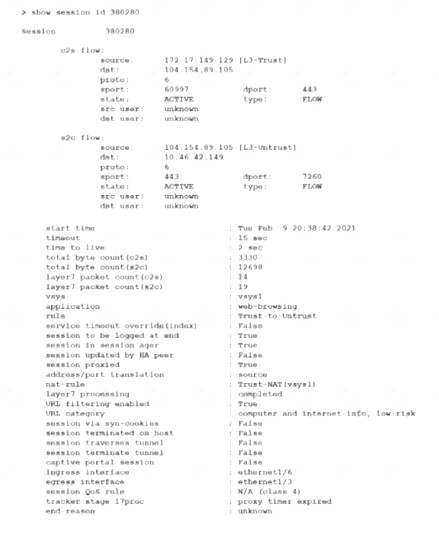
- A. The session went through SSL decryption processing.
- B. The session has ended with the end-reason unknown.
- C. The application has been identified as web-browsing.
- D. The session did not go through SSL decryption processing.
Answer: AC
NEW QUESTION 10
Which template values will be configured on the firewall if each template has an SSL to be deployed. The template stack should consist of four templates arranged according to the diagram.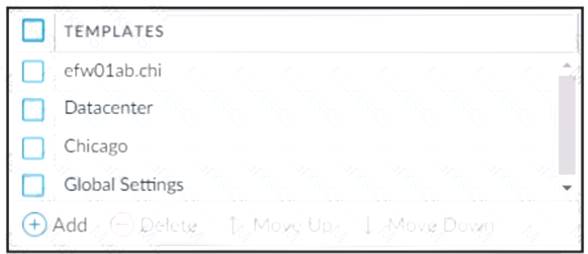
Which template values will be configured on the firewall if each template has an SSL/TLS Service profile configured named Management?
- A. Values in Datacenter
- B. Values in efwOlab.chi
- C. Values in Global Settings
- D. Values in Chicago
Answer: D
Explanation:
The template stack should consist of four templates arranged according to the diagram. The template values that will be configured on the firewall if each template has an SSL/TLS Service profile configured named Management will be the values in Chicago. This is because the SSL/TLS Service profile is configured in the Chicago template, which is the highest priority template in the stack. The firewall will inherit the settings from the highest priority template that has the setting configured, and ignore the settings from the lower priority templates that have the same setting configured. Therefore, the values in Datacenter, efwOlab.chi, and Global Settings will not be applied to the firewall. References: [Template Stack Configuration]
 [Template Stack Priority]
NEW QUESTION 11
Refer to Exhibit: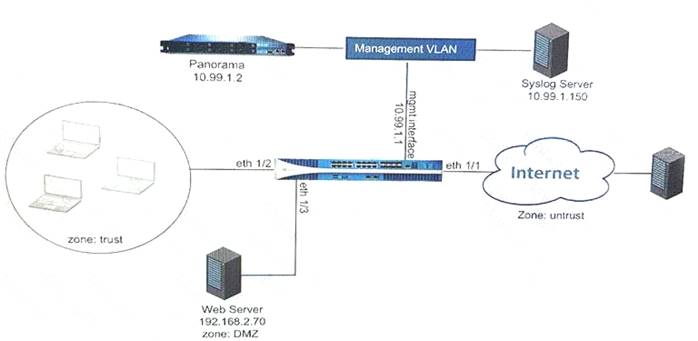
An administrator can not see any Traffic logs from the Palo Alto Networks NGFW in Panorama reports. The configuration problem seems to be on the firewall. Which settings, if configured incorrectly, most likely would stop only Traffic logs from being sent from the NGFW to Panorama?
A)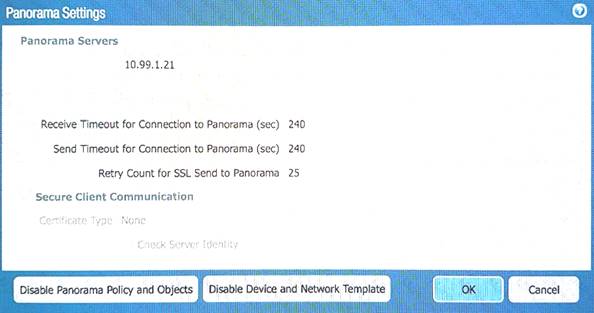
B)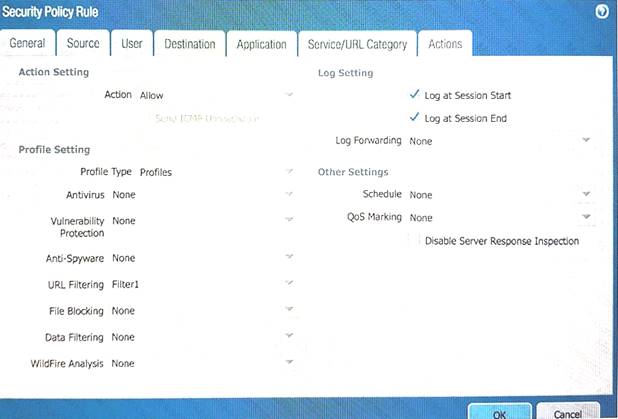
C)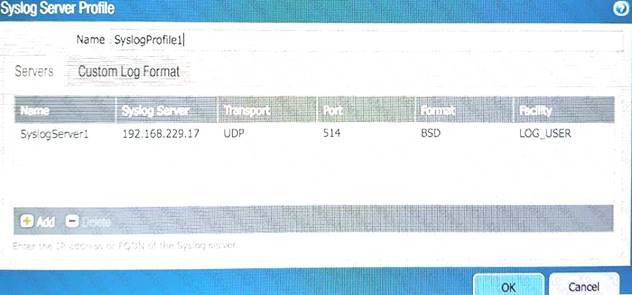
D)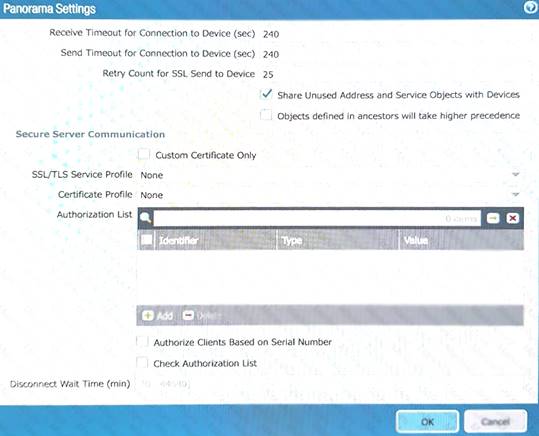
- A. Option A
- B. Option B
- C. Option C
- D. Option D
Answer: C
NEW QUESTION 12
Which log type would provide information about traffic blocked by a Zone Protection profile?
- A. Data Filtering
- B. IP-Tag
- C. Traffic
- D. Threat
Answer: D
Explanation:
https://knowledgebase.paloaltonetworks.com/KCSArticleDetail?id=kA10g000000ClhzCAC D is the correct answer because the threat log type would provide information about traffic blocked by a Zone Protection profile. This is because Zone Protection profiles are used to protect the network from attacks, including common flood, reconnaissance attacks, and other packet-based attacks1. These attacks are classified as threats by the firewall and are logged in the threat log2. The threat log displays information such as the source and destination IP addresses, ports, zones, applications, threat types, actions, and severity of the threats2.
Verified References: 1: Zone protection profiles - Palo Alto Networks Knowledge Base 2: Threat Log Fields - Palo Alto Networks
NEW QUESTION 13
A company has configured GlobalProtect to allow their users to work from home. A decrease in performance for remote workers has been reported during peak-use hours.
Which two steps are likely to mitigate the issue? (Choose TWO)
- A. Exclude video traffic
- B. Enable decryption
- C. Block traffic that is not work-related
- D. Create a Tunnel Inspection policy
Answer: AC
Explanation:
https://knowledgebase.paloaltonetworks.com/KCSArticleDetail?id=kA10g000000PP3ICAW
NEW QUESTION 14
An administrator needs to identify which NAT policy is being used for internet traffic.
From the Monitor tab of the firewall GUI, how can the administrator identify which NAT policy is in use for a traffic flow?
- A. Click Session Browser and review the session details.
- B. Click Traffic view and review the information in the detailed log view.
- C. Click Traffic view; ensure that the Source or Destination NAT columns are included and review the information in the detailed log view.
- D. Click App Scope > Network Monitor and filter the report for NAT rules.
Answer: C
Explanation:
Traffic view in the Monitor tab of the firewall GUI can display the information about the NAT policy that is in use for a traffic flow, if the Source or Destination NAT columns are included and reviewed in the detailed log view1. The Source NAT column shows the translated source IP address and port, and the Destination NAT column shows the translated destination IP address and port2. These columns can help the administrator identify which NAT policy is applied to the traffic flow based on the pre-NAT and post-NAT addresses and ports.
NEW QUESTION 15
An organization wants to begin decrypting guest and BYOD traffic.
Which NGFW feature can be used to identify guests and BYOD users, instruct them how to download and install the CA certificate, and clearly notify them that their traffic will be decrypted?
- A. Authentication Portal
- B. SSL Decryption profile
- C. SSL decryption policy
- D. comfort pages
Answer: A
Explanation:
An authentication portal is a feature that can be used to identify guests and BYOD users, instruct them how to download and install the CA certificate, and clearly notify them that their traffic will be decrypted. An authentication portal is a web page that the firewall displays to users who need to authenticate before accessing the network or the internet. The authentication portal can be customized to include a welcome message, a login prompt, a disclaimer, a certificate download link, and a logout button. The authentication portal can also be configured to use different authentication methods, such as local database, RADIUS, LDAP, Kerberos, or SAML1. By using an authentication portal, the firewall can redirect BYOD users to a web page where they can learn about the decryption policy, download and install the CA certificate, and agree to the terms of use before accessing the network or the internet2.
An SSL decryption profile is not a feature that can be used to identify guests and BYOD users, instruct them how to download and install the CA certificate, and clearly notify them that their traffic will be decrypted. An SSL decryption profile is a set of options that define how the firewall handles SSL/TLS traffic that it
decrypts. An SSL decryption profile can include settings such as certificate verification, unsupported protocol handling, session caching, session resumption, algorithm selection, etc3. An SSL decryption profile does not provide any user identification or notification functions.
An SSL decryption policy is not a feature that can be used to identify guests and BYOD users, instruct them how to download and install the CA certificate, and clearly notify them that their traffic will be decrypted. An SSL decryption policy is a set of rules that determine which traffic the firewall decrypts based on various criteria, such as source and destination zones, addresses, users, applications, services, etc. An SSL decryption policy can also specify which type of decryption to apply to the traffic, such as SSL Forward Proxy, SSL Inbound Inspection, or SSH Proxy4. An SSL decryption policy does not provide any user identification or notification functions.
Comfort pages are not a feature that can be used to identify guests and BYOD users, instruct them how to download and install the CA certificate, and clearly notify them that their traffic will be decrypted. Comfort pages are web pages that the firewall displays to users when it blocks or fails to decrypt certain traffic due to security policy or technical reasons. Comfort pages can include information such as the reason for blocking or failing to decrypt the traffic, the URL of the original site, the firewall serial number, etc5. Comfort pages do not provide any user identification or notification functions before decrypting the traffic.
References: Configure an Authentication Portal, Redirect Users Through an Authentication Portal, SSL Decryption Profile, Decryption Policy, Comfort Pages
How to Implement SSH Decryption on a Palo Alto Networks Device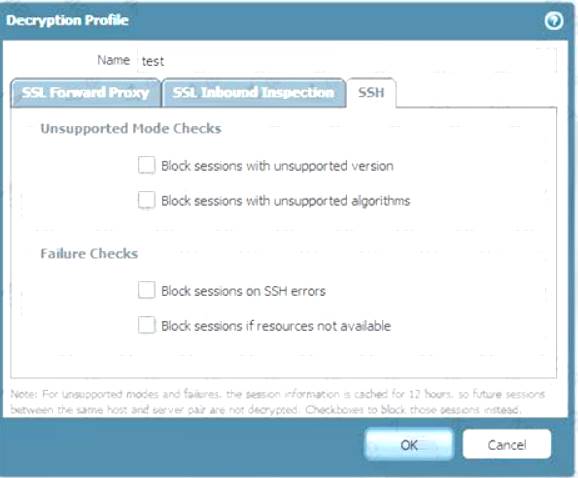
NEW QUESTION 16
An engineer manages a high availability network and requires fast failover of the routing protocols. The engineer decides to implement BFD.
Which three dynamic routing protocols support BFD? (Choose three.)
- A. OSPF
- B. RIP
- C. BGP
- D. IGRP
- E. OSPFv3 virtual link
Answer: ABC
Explanation:
https://docs.paloaltonetworks.com/pan-os/11-0/pan-os-networking-admin/bfd/bfd-overview/bfd-for-dynamic-ro
NEW QUESTION 17
In a template, which two objects can be configured? (Choose two.)
- A. SD-WAN path quality profile
- B. Monitor profile
- C. IPsec tunnel
- D. Application group
Answer: BC
Explanation:
https://docs.paloaltonetworks.com/pan-os/10-1/pan-os-web-interface-help/network/network-network-profiles/ne
NEW QUESTION 18
An engineer troubleshoots a Panorama-managed firewall that is unable to reach the DNS servers configured via a global template. As a troubleshooting step, the engineer needs to configure a local DNS server in place of the template value.
Which two actions can be taken to ensure that only the specific firewall is affected during this process? (Choose two )
- A. Configure the DNS server locally on the firewall.
- B. Change the DNS server on the global template.
- C. Override the DNS server on the template stack.
- D. Configure a service route for DNS on a different interface.
Answer: AC
Explanation:
To override a device and network setting applied by a template, you can either configure the setting locally on the firewall or override the setting on the template stack. Configuring the setting locally on the firewall will
copy the setting to the local configuration of the device and will no longer be controlled by the template. Overriding the setting on the template stack will apply the setting to all the firewalls that are assigned to the template stack, unless the setting is also overridden locally on a firewall. Changing the setting on the global template will affect all the firewalls that inherit the setting from the template, which is not desirable in this scenario. Configuring a service route for DNS on a different interface will not change the DNS server address, but only the interface that the firewall uses to reach the DNS server. References: Override a Template SettingOverriding Panorama Template settings
NEW QUESTION 19
......
Thanks for reading the newest PCNSE exam dumps! We recommend you to try the PREMIUM Thedumpscentre.com PCNSE dumps in VCE and PDF here: https://www.thedumpscentre.com/PCNSE-dumps/ (294 Q&As Dumps)